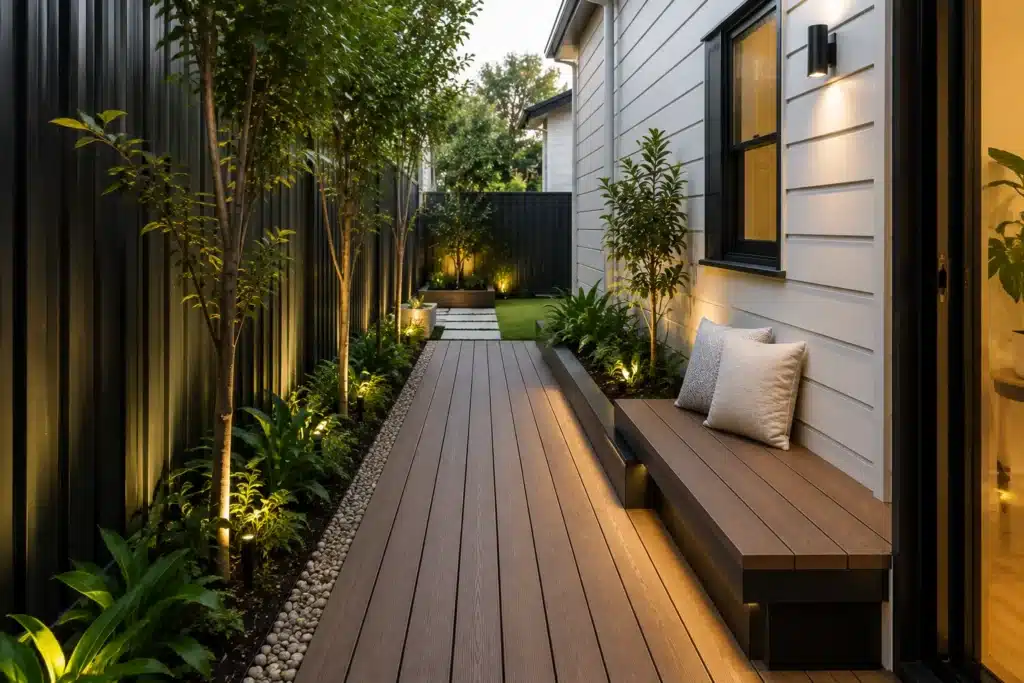
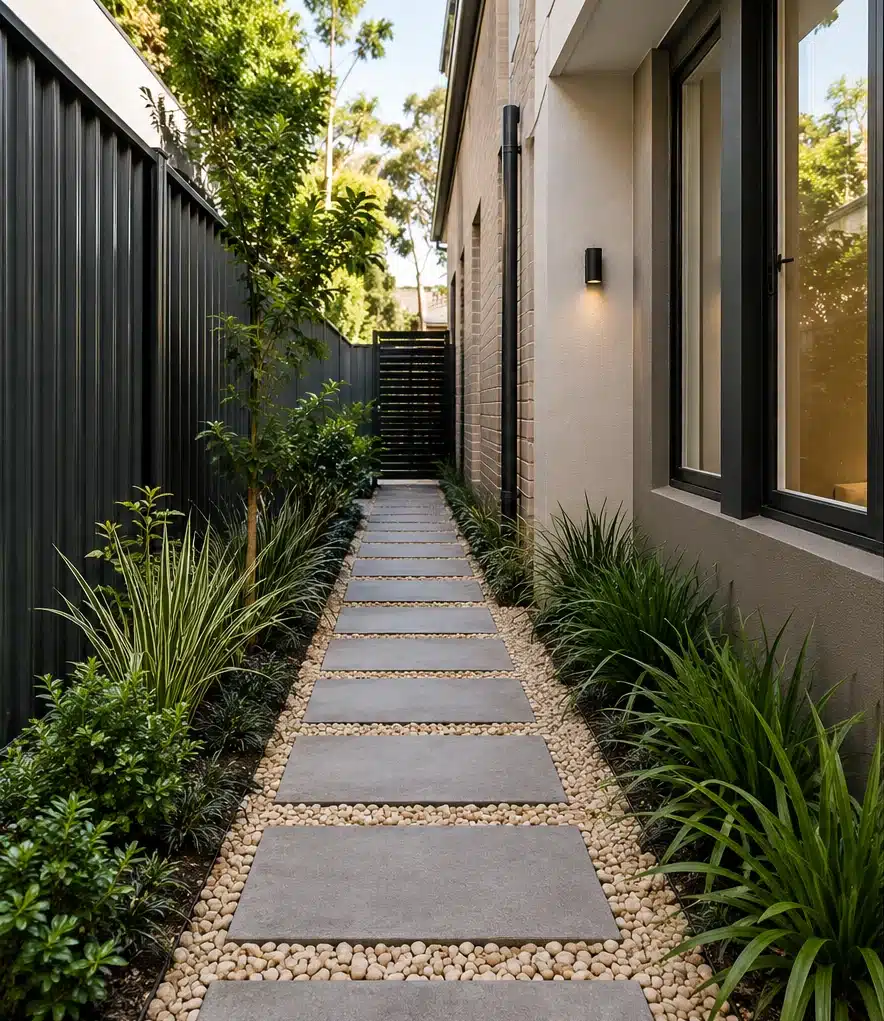
Narrow side yard landscaping ideas can turn an awkward passage beside your Sydney home into a practical, attractive and easy-to-maintain outdoor space. Even when the area is only wide enough for a path, thoughtful choices around drainage, paving, plants, lighting and storage can make it feel like a deliberate part of the garden rather than leftover space.
The best result usually begins with function. Some side yards are important access routes between the street and backyard. Others contain bins, taps, air-conditioning equipment, utility meters or drainage points. Before choosing plants or finishes, decide what must remain accessible and how people will move through the area.
This guide explores eleven narrow side yard landscaping ideas suited to Sydney homes, including shaded passages, sloping blocks, compact suburban properties and low-maintenance gardens.
Measure the narrowest point, locate utilities and downpipes, watch where rainwater travels, and record how much direct sunlight the space receives. A side passage that is sunny in summer may remain shaded and damp through winter.
Why Narrow Side Yard Landscaping Needs Careful Planning
A narrow side yard may look simple, but several practical requirements often compete for the same limited space. The path needs to feel comfortable, plants need room to mature, water must move away safely, and essential services must remain accessible.
Successful narrow side yard landscaping ideas normally address five things together:
- A clear and safe walking route
- Reliable surface and garden-bed drainage
- Plants suited to the available light and soil
- Easy access to gates, taps, meters and equipment
- A simple visual connection between the front and back gardens
For complicated levels, poor drainage or several competing uses, a professional landscape design can help organise the space before construction begins.
1. Decide What the Side Yard Must Do
Before comparing pavers or plants, give the area a clear purpose. This prevents an attractive design from becoming inconvenient in daily use.
Your side yard may need to function as:
- The main pedestrian route to the backyard
- A place for bins, bicycles or gardening equipment
- Access for maintenance workers and building trades
- A visual garden viewed through nearby windows
- A quiet green passage rather than a service area
- A connection between an entertaining area and the front entrance
Where the passage is used regularly, prioritise an even, durable surface. Where it is mainly viewed from inside, planting and a focal point may be more important. This functional decision should guide all the other narrow side yard landscaping ideas in your plan.
2. Create One Clear Walking Line
A narrow space often feels more generous when the pathway follows one strong, uncluttered line. Too many changes in direction, paving patterns or garden-bed widths can make the passage feel busy and smaller.
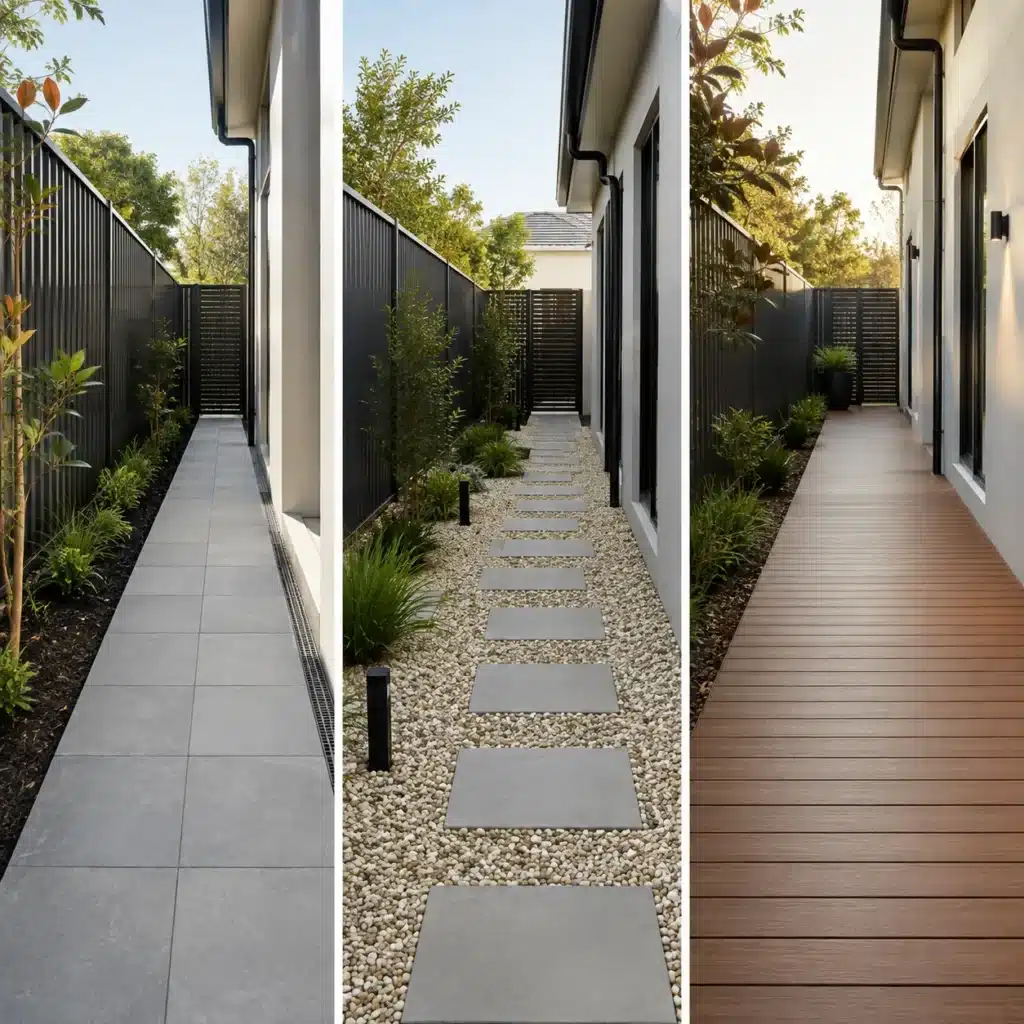
Large-format stepping stones, rectangular pavers or a continuous paved path can visually stretch the area. Long pavers installed in the direction of travel reinforce the length of the passage, while consistent spacing creates a calm rhythm.
For a frequently used route, make sure the surface is comfortable underfoot and suitable in wet weather. Decorative pebbles can look attractive, but they may be inconvenient for wheelie bins, prams, bicycles or anyone who needs a stable walking surface.
Arianya’s paving services can help coordinate surface preparation, edge restraints, levels and the transition into adjoining garden areas.
3. Use Permeable Materials Where Appropriate
Drainage deserves early attention because side passages commonly sit between the house and a boundary fence, receive water from roof downpipes, and may get limited sunlight after rain.
Instead of covering the whole area with an impermeable slab, suitable narrow side yard landscaping ideas can include permeable paving, stepping stones, gravel bands or planted sections. Australia’s YourHome guidance recommends reducing impervious surfaces and considering options such as permeable paving, pebble paths and garden areas to help manage stormwater.
Learn more from the Australian Government’s stormwater landscaping guidance.
| Surface option | Works well for | Points to consider |
|---|---|---|
| Large stepping pavers | Garden-style passages and occasional access | Spacing should feel natural and stable underfoot. |
| Permeable paving | Neat, contemporary paths where drainage is important | The base and drainage layers need correct preparation. |
| Compacted gravel | Informal, budget-conscious or low-traffic paths | Good edging helps prevent stones spreading into garden beds. |
| Continuous paving | Bins, bicycles, regular foot traffic and easier access | Levels and stormwater direction need to be carefully planned. |
| Stepping stones with groundcover | Soft, garden-focused side passages | Select a groundcover that tolerates the available light and foot traffic. |
Any new path or paving must suit the property’s existing drainage and planning requirements. NSW Planning provides guidance on when pathways and paving may qualify as exempt development, but property-specific controls should always be checked before work begins.
See the NSW Government’s pathway and paving guidance.
4. Grow Upward Instead of Outward
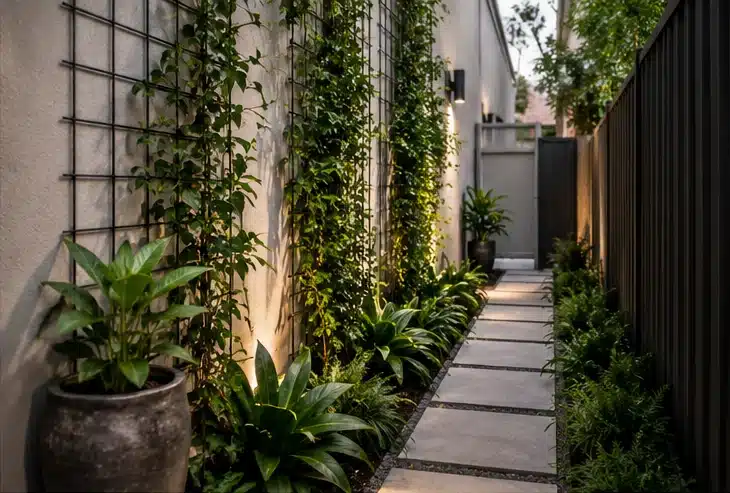
Vertical planting is one of the most useful narrow side yard landscaping ideas because it adds greenery without taking much width from the path.
Depending on the conditions, vertical elements may include:
- A slim trellis with a suitable climbing plant
- Wall-mounted pots or modular planters
- Climbing wires installed in a simple pattern
- A narrow green screen in front of an unattractive fence
- Espaliered plants trained close to a wall
Avoid installing a dense vertical garden simply because the wall is empty. Consider irrigation, waterproofing, mature plant weight and maintenance access. A restrained trellis with one well-selected climber can be more reliable than a complicated wall system.
5. Choose Plants for the Actual Light Conditions
Plant selection should be based on observed conditions rather than whether a plant is commonly described as suitable for “shade”. Side yards can contain several microclimates within a short distance. One end may receive strong afternoon sun while the area beside the house remains cool, shaded and damp.
Before planting, check:
- How many hours of direct sunlight reach each section
- Whether reflected heat comes from brick, render or metal fencing
- Whether the soil remains wet after rain
- How much mature width each plant requires
- Whether foliage will obstruct windows, gates or equipment
Depending on the site, possible plant groups may include lomandra, dianella, native violet, bird’s nest fern, clivia, liriope and compact varieties of westringia. These are examples rather than a universal planting list. The final selection should match the specific sunlight, soil moisture, drainage and maintenance conditions of your property.
Using native and locally suitable plants can reduce water demand while providing habitat, according to the Australian Government’s sustainable landscaping guidance.
Always check mature plant width. A shrub that looks perfectly proportioned when newly planted may eventually cover half the path, block a gate or restrict airflow around the house.
6. Layer Plants Without Crowding the Passage
Traditional garden layering uses groundcovers, shrubs and taller background plants. The same principle works in a side yard, but the layers should be shallower and more controlled.
Try placing low groundcovers beside the path, upright grasses or strappy plants behind them, and climbers or narrow screening plants against the boundary. Repeating a small selection of plants usually looks more spacious than filling the garden bed with many unrelated species.
These layered narrow side yard landscaping ideas can create depth while keeping the usable path open. They also make maintenance easier because each plant has a defined role.
7. Repeat Materials from the Front or Backyard
A side passage should not feel like a completely separate project. Repeating a paving colour, timber tone, gravel type, edging material or planting style from another part of the property creates continuity.
For example:
- Continue the backyard’s large-format pavers through the side passage.
- Match a side gate or screen to the home’s fence colour.
- Repeat one feature plant from the front garden.
- Use the same edging finish around adjoining garden beds.
- Carry the backyard lighting style along the access path.
Consistency is particularly useful in narrow side yard landscaping ideas because too many competing materials can make a small space feel fragmented.
8. Add Low-Level Lighting for Safer Access
Side passages can become very dark at night, especially when they are enclosed by a high fence and the external wall of the house. Lighting improves access while also highlighting plants and paving.
Useful options include low bollard lights, recessed step lights, downward-facing wall lights and subtle illumination beneath a floating bench or screen. Position lights to reveal changes in level, gate hardware and the edges of the path without shining directly into nearby windows.
Keep the design simple. A narrow passage usually benefits from a repeated line of low, warm lighting rather than several decorative fixture styles.
9. Screen Bins and Utilities Without Blocking Access
Many side yards are working spaces. Bins, hot-water systems, taps, meters, pool equipment and air-conditioning units often need to stay there, even after landscaping.
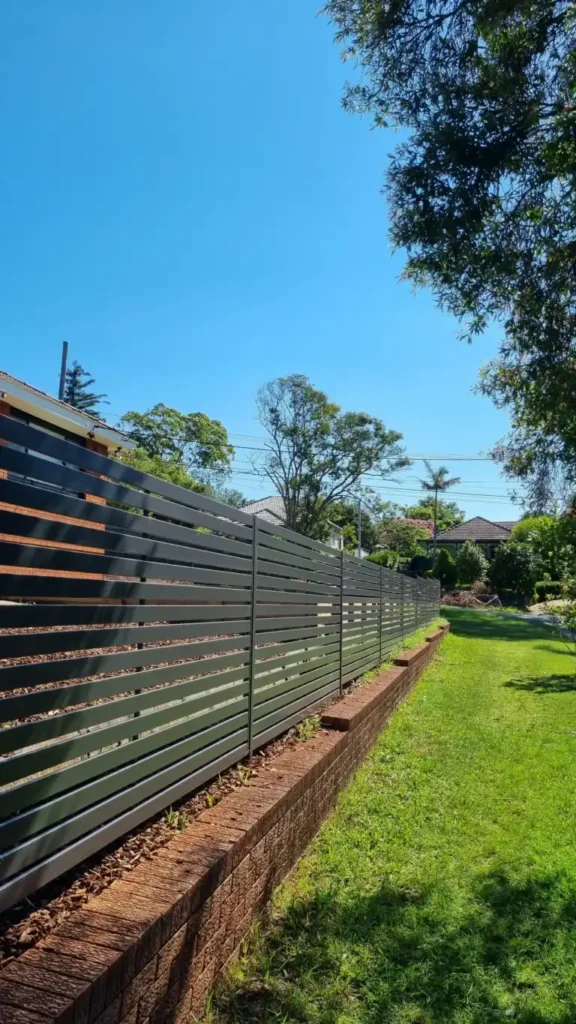
A slatted timber or aluminium screen can soften the view, but it must preserve ventilation, required clearances and maintenance access. Gates and removable panels can help trades reach equipment without damaging garden beds.
Where boundary security or a new access gate forms part of the project, Arianya’s fence installation service can coordinate the screening style with the rest of the landscape.
10. Add Storage That Uses Very Little Floor Space
Storage can make the passage more useful, but deep cupboards and freestanding sheds may leave too little room to walk. Better narrow side yard landscaping ideas include wall-mounted tool racks, shallow weather-resistant cabinets, vertical bicycle storage or a slim custom bench with storage beneath it.
Place storage near the entrance where possible so items can be reached without carrying them through the entire side passage. Keep anything that needs frequent access away from delicate planting.
Before attaching storage to a wall, confirm the construction method, waterproofing requirements and clearance from utilities.
11. Create a Focal Point at the End
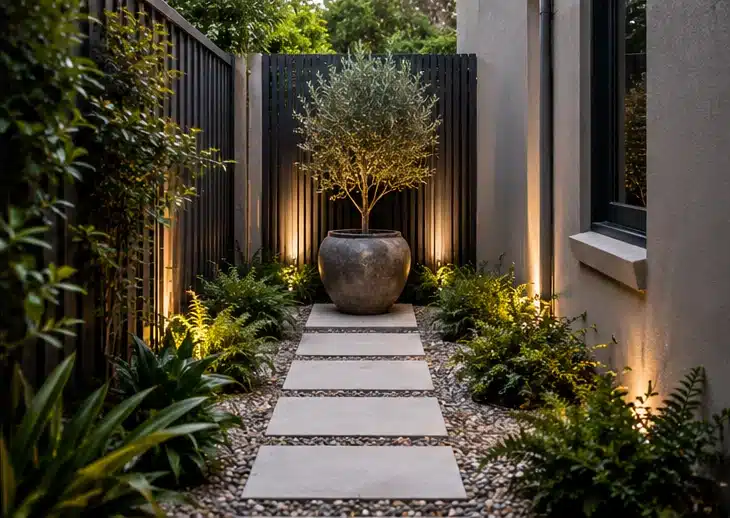
A clear focal point encourages the eye to travel through the passage, making it feel more intentional and inviting. The feature does not have to be large or expensive.
Good choices may include:
- A specimen plant in a simple pot
- A small sculpture or feature stone
- A contrasting gate
- A textured wall panel
- A compact bench where sufficient room is available
- A softly illuminated tree or vertical planting feature
The focal point should be proportional to the space. A large water feature or bulky decorative item can obstruct movement and create more maintenance than enjoyment.
Low-Maintenance Narrow Side Yard Landscaping Ideas
Low maintenance does not mean covering every surface in concrete. It means choosing materials and plants that match how the space is used and how easily it can be cleaned, watered and repaired.
For a more manageable side yard:
- Use a limited plant palette with repeat planting.
- Install defined edging between gravel and garden beds.
- Avoid plants with thorns beside a narrow access route.
- Keep deciduous plants away from drains where leaf build-up may be a problem.
- Provide accessible irrigation rather than relying on hand watering behind dense foliage.
- Leave enough room to clean walls, windows and air-conditioning equipment.
- Choose surfaces that suit bins, bicycles and expected foot traffic.
Regular pruning, irrigation checks and seasonal cleaning can also prevent a compact garden from becoming crowded. Arianya provides garden maintenance services for homeowners who need ongoing support after installation.
Common Side Yard Landscaping Mistakes
Ignoring drainage until the paving is finished
Surface levels, garden beds, downpipes and drains should be considered together before construction. Fixing water problems after paving is installed can require disruptive rework.
Making the garden bed too wide
A generous new garden bed may leave an uncomfortable walking route once plants mature. Mark the proposed path and planting area on the ground before committing to the layout.
Choosing plants only for their appearance
A plant may suit the visual style but struggle with deep shade, reflected heat or wet soil. Healthy plants that suit the site will look better than fashionable plants constantly under stress.
Blocking essential building access
Do not permanently cover inspection points, utility meters, taps, drainage components or equipment access. Account for doors, windows and gates that open into the passage.
Using too many small decorative elements
Several pot styles, paving patterns, ornaments and plant varieties can make a narrow space feel cluttered. One strong path, one planting theme and one focal point usually create a cleaner result.
A Simple Planning Checklist for Sydney Homeowners
Use this checklist before finalising your preferred narrow side yard landscaping ideas:
- Measure the full length and the narrowest usable width.
- Mark gates, windows, doors, taps, utilities and drainage points.
- Observe sunlight and moisture at different times of day.
- Decide whether the path must accommodate bins, bicycles or equipment.
- Select the main paving or pathway material.
- Plan surface falls and drainage before choosing decorative finishes.
- Check the mature height and width of every proposed plant.
- Preserve ventilation and servicing clearances around equipment.
- Plan irrigation, lighting and electrical work before planting.
- Check relevant council and NSW planning requirements.
Turn an Overlooked Passage into a Useful Garden
The most effective narrow side yard landscaping ideas do more than make the area look greener. They improve everyday access, manage water, conceal necessary services and connect the front and back of the property.
Start with the practical requirements, then use a simple path, restrained planting, vertical greenery and carefully positioned lighting to give the passage character. With the right proportions and materials, even a very narrow side yard can become a polished and useful part of a Sydney home.
For help planning and building a side passage that suits your property, explore Arianya’s landscape construction services or arrange a personalised landscape consultation.