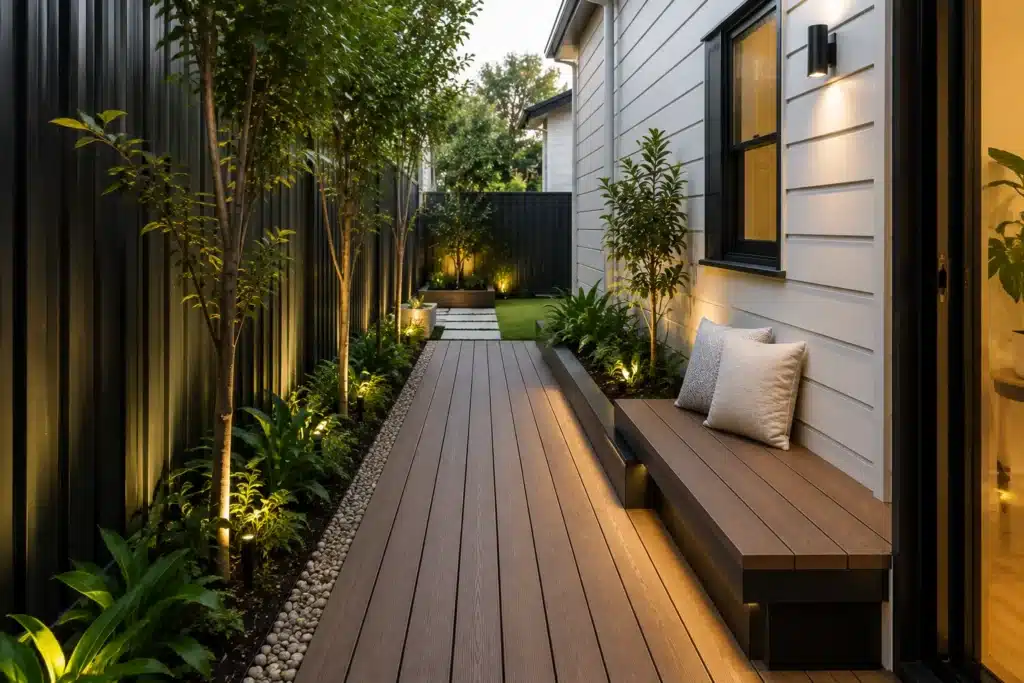
These low-maintenance front yard landscaping ideas can help Sydney homeowners create a welcoming entrance without spending every weekend mowing, watering, pruning and weeding.
A well-designed front yard can improve street appeal and add practical value to your home. However, large lawns, fast-growing hedges and plants that are unsuitable for the local conditions can quickly become difficult and time-consuming to maintain.
With a practical layout, climate-suitable plants, durable materials and efficient irrigation, you can create an attractive outdoor space that needs less regular care. This guide covers 12 low maintenance front yard ideas, including native planting, garden edging, paving, lawn alternatives, irrigation and retaining walls.
What Makes Low-Maintenance Front Yard Landscaping Easier to Manage?
A low-maintenance garden is not necessarily a garden that requires no work. Every outdoor space needs some seasonal care. The goal is to reduce unnecessary tasks by making better design and planting decisions from the beginning.
A practical low-maintenance front yard usually includes:
- Plants suited to the site’s sunlight, soil and drainage
- Fewer high-maintenance hedges and fast-growing shrubs
- A smaller lawn or suitable lawn alternative
- Clearly defined garden edging
- Mulched planting areas
- Efficient irrigation
- Durable pathways and hard landscaping
- Enough room for every plant to reach its mature size
Good planning can reduce frequent mowing, pruning, watering, weeding and plant replacement while still creating a garden that looks intentional and welcoming.
1. Start With a Practical Landscape Plan
The most effective low-maintenance gardens begin with a clear plan. Before selecting plants or materials, assess the existing conditions of your property.
Consider how much sunlight different areas receive, where water collects after rain, whether the site is level or sloping and how people move between the street, driveway and front entrance.
You should also consider:
- Existing trees and structures
- Privacy from neighbours and the street
- Access to the front door
- Visibility around the driveway
- Soil condition and drainage
- Outdoor lighting
- Bin storage
- Your preferred garden style
- How much time you want to spend on maintenance
A front yard may look simple, but it often needs to perform several functions at once. It must provide safe access, suit the architecture of the home, remain practical throughout the year and create a positive first impression.
Arianya’s professional landscape design services in Sydney can help organise these requirements into a practical plan before construction begins.
2. Choose Australian Native and Climate-Suitable Plants
Plant selection has a major impact on long-term maintenance. A plant may look attractive at the nursery but still be unsuitable for your property.
It may grow too large, require frequent pruning, struggle in the available sunlight or perform poorly in the site’s soil and drainage conditions.
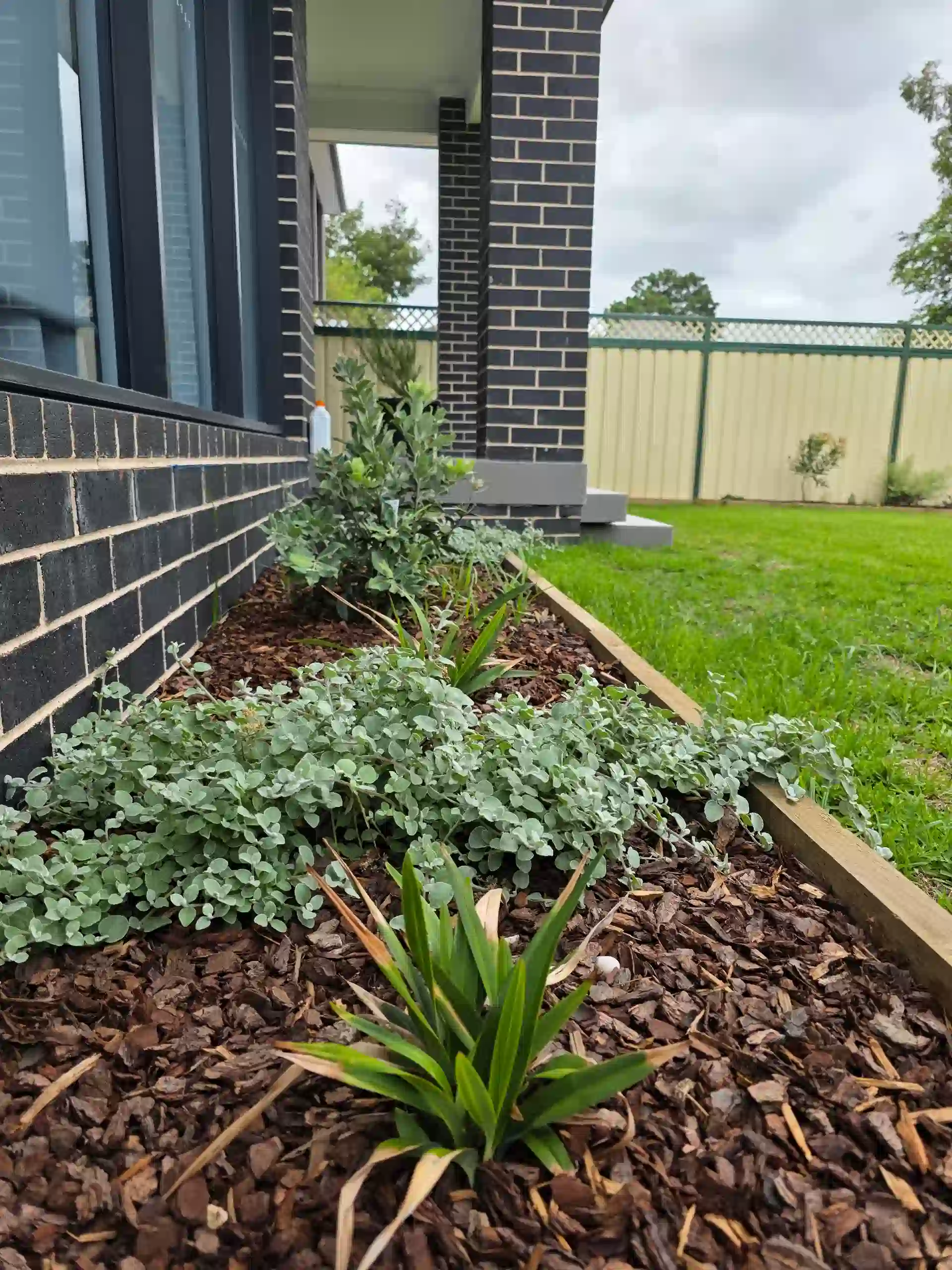
Australian native and climate-suitable plants can be excellent choices for Sydney gardens when they are carefully matched to the site. Depending on the location and conditions, suitable options may include varieties of:
- Lomandra
- Dianella
- Westringia
- Correa
- Grevillea
- Callistemon
- Banksia
- Native violet
Plant selection note: A plant being labelled “native” does not automatically make it suitable for every Sydney property. Always check the variety’s mature size, sunlight requirements, soil preferences and drainage needs.
Before choosing a plant, check its:
- Mature height and width
- Sunlight requirements
- Soil preferences
- Drainage needs
- Growth rate
- Pruning requirements
- Suitability near paths, windows and driveways
Grouping plants with similar watering requirements can also make irrigation simpler and more efficient.
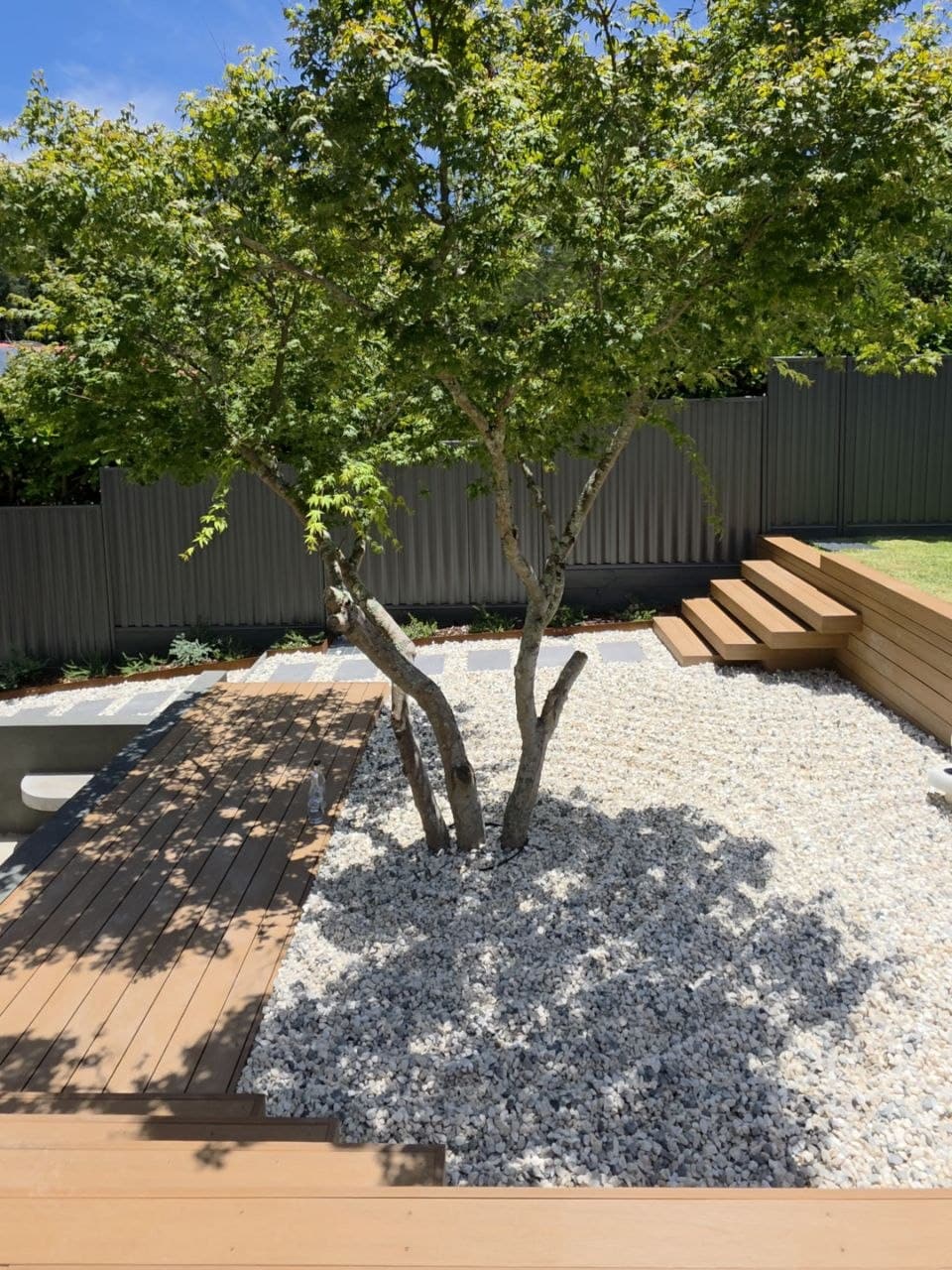
Homeowners can also explore the Australian Native Plants Society plant guides for general information about native plant genera, cultivation and growing requirements.
3. Reduce the Amount of Lawn
A large lawn can create an attractive open appearance, but it often requires regular mowing, edging, fertilising and watering.
Reducing the total lawn area can significantly lower maintenance without removing greenery completely.
Instead of using lawn across the entire front yard, consider creating a smaller feature lawn surrounded by:
- Garden beds
- Groundcover plants
- Gravel
- Stepping stones
- Paved pathways
- Mulched planting zones
A smaller, well-shaped lawn often looks more intentional than a large area of turf that is difficult to maintain.
Natural turf may still be suitable for households that want a soft, usable green space. Artificial grass may be appropriate in some locations, although heat exposure, drainage, appearance and intended use should be considered carefully.
Learn more about Arianya’s turf laying services and artificial grass installation services .
4. Use Defined Garden Edging
Garden edging is a simple feature that can make a major difference to the appearance and maintenance of a front yard.
Clear edging separates lawns, garden beds, gravel areas and pathways. It helps prevent soil and mulch from spreading and can make mowing easier by creating a clear boundary.
Edging can also give informal or native planting a more structured appearance.
Possible edging materials include:
- Steel
- Aluminium
- Timber
- Brick
- Stone
- Concrete
- Masonry products
The best material should suit the home’s architecture, the surrounding landscape and the expected level of wear.
Avoid combining too many different materials in a small front yard. Repeating one or two materials generally creates a cleaner and more cohesive result.
Explore Arianya’s garden edging services for professionally installed garden borders and landscape separation.
The NSW Government’s Sydney Nature gardening guidance also recommends seeking local native plant advice from council nurseries and selecting plants suited to the surrounding area.
5. Add Durable Paving and Stepping Stones
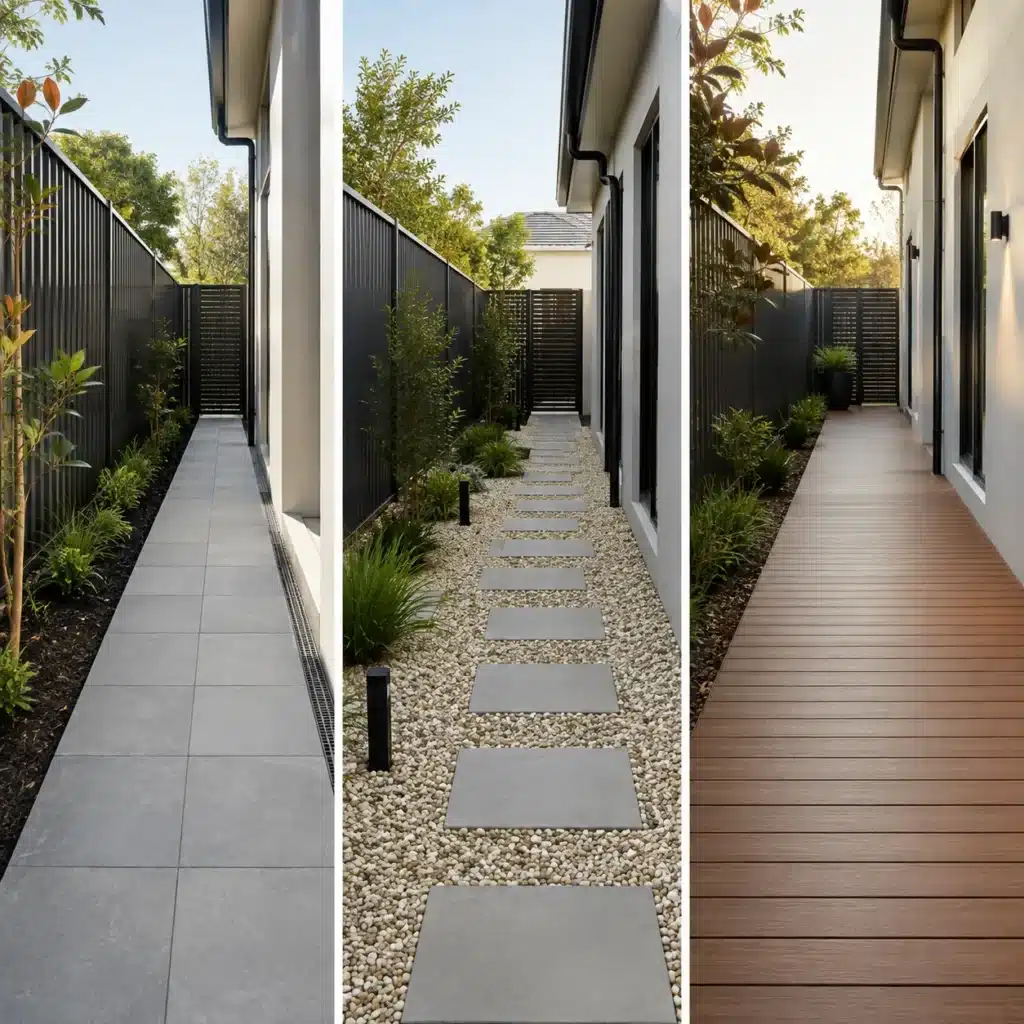
A clear pathway helps guide visitors from the footpath, driveway or gate to the front entrance. It also reduces the need to walk across lawns and planting areas, particularly during wet weather.
For a low-maintenance entrance, choose materials that are durable, practical and compatible with the style of the home.
Options may include:
- Concrete pavers
- Natural stone
- Brick paving
- Large-format stepping stones
- Permeable paving where appropriate
The path should feel direct and comfortable to use. Avoid creating an unnecessarily complicated route that visitors are likely to ignore.
When selecting paving, consider:
- Slip resistance
- Drainage
- Surface durability
- Joint width
- Cleaning requirements
- Colour and texture
- Compatibility with existing materials
Correct preparation and installation are important. Poorly installed paving can become uneven, collect water or allow weeds to establish between joints.
View Arianya’s Sydney paving services for pathways, driveways, patios, pool surrounds and other hard-landscaping features.
6. Apply Mulch to Garden Beds
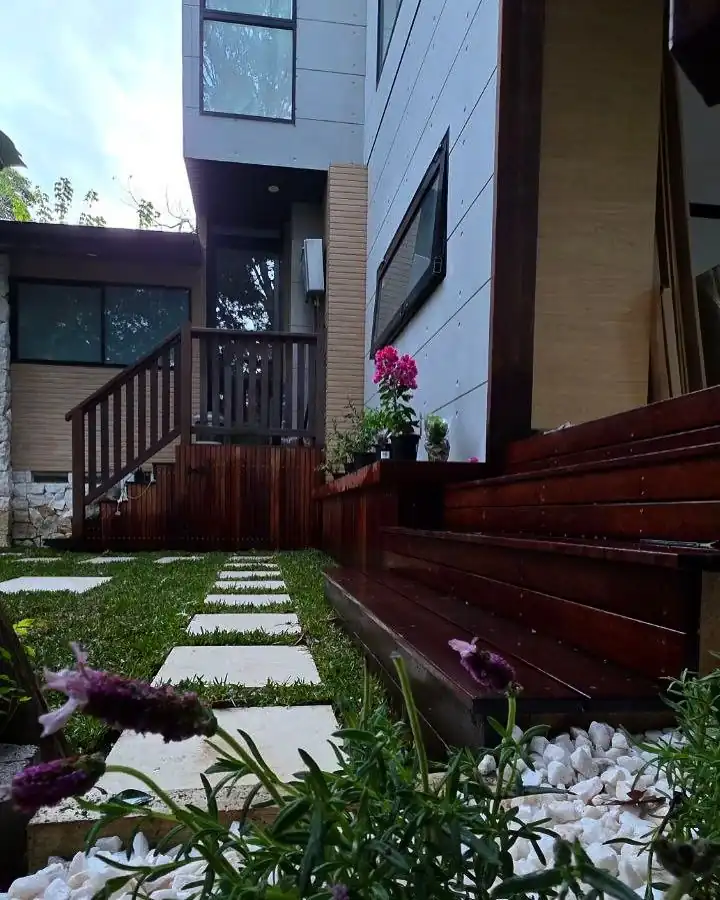
Mulch can help reduce several common maintenance tasks. When applied correctly, it can help retain soil moisture, moderate soil temperature and reduce weed growth.
It can also give garden beds a finished and consistent appearance. Organic mulches gradually break down and may contribute organic matter to the soil. Inorganic options, such as decorative gravel, may suit particular garden styles and locations.
Whichever material you choose, avoid placing mulch directly against plant stems, tree trunks, building walls or drainage openings.
Mulch will not stop every weed, but it can make garden beds easier to manage, particularly when combined with appropriate planting density and regular removal of weeds before they produce seeds.
Mulch may need to be replenished over time as it settles or breaks down.
7. Install Efficient Irrigation
Even drought-tolerant plants usually need regular watering while they establish. An efficient irrigation system can reduce time spent watering by hand and help deliver water more consistently.
For garden beds, drip irrigation can direct water close to the root zone. Separate irrigation zones can also allow different parts of the garden to receive watering based on their needs.
A practical system may include:
- Drip lines for garden beds
- Separate zones for lawns and planting
- A timer or smart controller
- Seasonal scheduling
- Accessible shut-off points
- Regular checks for leaks and blocked emitters
Irrigation should be adjusted throughout the year rather than operating on the same schedule in every season.
Overwatering can be just as harmful as underwatering. Plant selection, soil condition, drainage and weather should all influence the irrigation plan.
8. Choose Slow-Growing, Appropriately Sized Plants
Fast-growing plants can provide quick coverage, but they may also create more pruning and maintenance in the future.
Choosing plants according to their mature size can reduce the need for constant trimming and prevent plants from blocking paths, covering windows or interfering with driveways.
| Location | Useful Plant Characteristics |
|---|---|
| Beside pathways | Compact growth without sharp or spreading foliage |
| Below windows | Mature height below the window sill |
| Near driveways | Clear form that maintains visibility |
| On sloping garden beds | Dense roots and suitable ground coverage |
| Near the entrance | Neat form and year-round visual interest |
| In shaded areas | Plants suited to lower-light conditions |
Plants should not be placed too close together simply to make a new garden appear full immediately.
Correct spacing may look less dense at first, but it gives plants room to mature and helps reduce overcrowding, poor airflow and future removal work.
9. Create a Modern Native Front Garden
A native garden can be contemporary, structured and visually refined. For a modern appearance, use a limited plant palette and repeat the same species or varieties throughout the design.
This creates consistency and prevents the garden from appearing overly busy. You can also combine different foliage shapes and textures while keeping the number of plant types controlled.
A modern native front yard may include:
- Repeated groups of grasses or strappy-leaf plants
- Compact shrubs with defined forms
- One feature tree or architectural plant
- A clear entrance path
- Simple garden edging
- A restrained material palette
- Open sightlines around the driveway and front gate
- Gravel or mulch between planting groups
The aim is not to fill every available space. Allowing areas of visual simplicity can make the planting more effective.
The colours and materials should also complement the home. A contemporary property may suit large-format paving, steel edging and structured planting, while an older home may work better with brick, natural stone or softer garden forms.
10. Use Retaining Walls on Sloping Front Yards
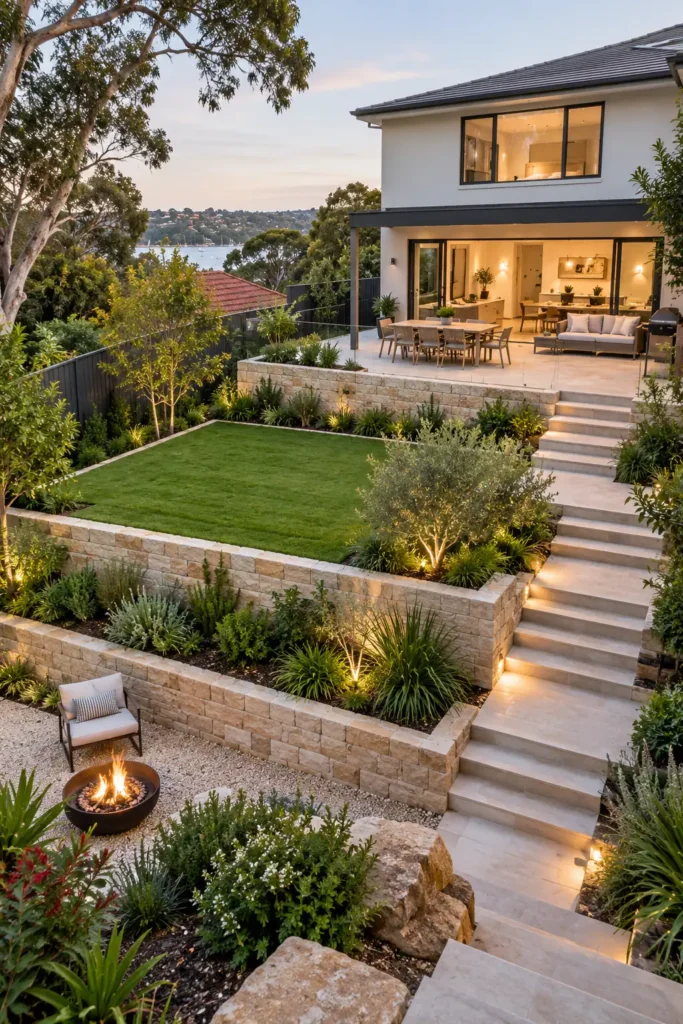
Sloping front yards can be difficult to plant, access and maintain. A carefully designed retaining wall may create more usable levels, define garden beds and help manage changes in elevation.
Retaining walls can also be combined with steps, pathways, planting and drainage to create a more organised entrance.
Common retaining-wall materials include:
- Concrete blocks
- Natural stone
- Timber
- Brick
- Rendered masonry
The appropriate material and construction method depend on the site, wall height, soil conditions, drainage and surrounding structures.
Structural note: Retaining walls should not be treated as decorative garden edging when they are holding back significant soil. Structural requirements, drainage and approval obligations can vary between properties and council areas.
A suitably qualified professional should assess significant retaining-wall work before construction. Visit Arianya’s retaining wall installation page to learn more.
11. Plan for Simple Seasonal Maintenance
Low-maintenance gardens still benefit from a basic care schedule. Small, regular tasks are often easier than waiting until the garden becomes overgrown or irrigation problems begin affecting plants.
Monthly Tasks
- Check for weeds
- Inspect irrigation
- Remove fallen branches or excessive leaf litter
- Check paths and drains
- Look for damaged or struggling plants
Seasonal Tasks
- Prune plants where necessary
- Adjust irrigation schedules
- Replenish mulch
- Check garden edging
- Remove dead or damaged growth
- Fertilise plants where appropriate
Annual Tasks
- Review plant size and performance
- Replace plants that are unsuitable for the conditions
- Inspect paving and retaining walls
- Clean drainage areas
- Assess whether the garden still suits the household’s needs
For households that prefer professional support, Arianya also provides garden maintenance services in Sydney .
12. Get Professional Help for Difficult Sites
Some front-yard projects are straightforward, while others require careful coordination between design, drainage, structures, planting and construction.
Professional assistance may be particularly valuable when the property includes:
- A significant slope
- Persistent drainage problems
- Large retaining walls
- Multiple levels
- Difficult site access
- Mature trees
- Complex paving
- Several connected landscaping elements
A landscape designer can help identify site constraints before construction starts and develop a design that considers how every element will work together.
This can be especially important when a project includes paving, planting, turf, drainage, retaining walls and irrigation within the same space.
Arianya provides integrated landscape construction services for residential outdoor spaces across Sydney.
A Low-Maintenance Front Yard Project in Epping
Arianya’s completed Epping project demonstrates how several practical landscaping elements can be combined to create a cleaner and more manageable front yard.
The project involved excavation and site levelling before the new landscaping elements were installed. Premium synthetic turf replaced the traditional lawn, creating an always-green surface without ongoing mowing or lawn watering.
The completed front yard also included:
- Premium synthetic turf
- Timber sleeper edging to frame the turf and garden areas
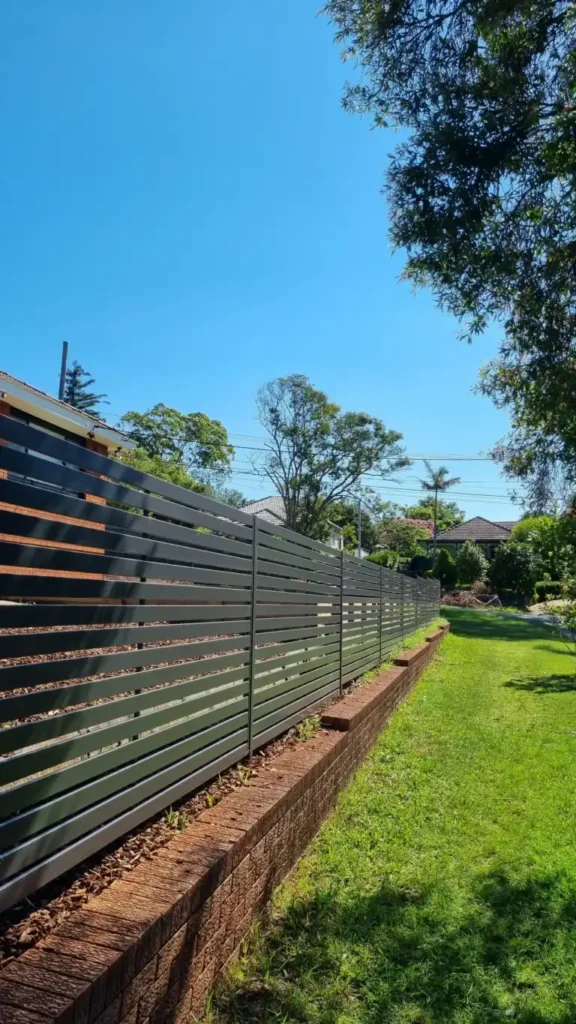
- A custom aluminium fence and gate
- A layout designed around durability and easier maintenance
The synthetic turf reduced regular lawn maintenance, while the timber edging created clear boundaries between different parts of the landscape. The aluminium fence and gate added security and a contemporary finish.
According to the published project information, the Epping landscaping work was completed over four weeks.
View Arianya’s low-maintenance front yard landscaping project in Epping for project images and additional details.
Start Planning Your Low-Maintenance Front Yard Landscaping
The most successful low-maintenance front yard landscaping ideas balance appearance with practical considerations such as sunlight, soil, drainage, plant size, lawn area, irrigation and seasonal care.
Start by understanding the conditions of your property and how you want to use the space. Then select plants and materials that suit those conditions instead of choosing them only for their immediate appearance.
Arianya can help plan and construct a front garden that complements your home, responds to the site and matches your preferred level of maintenance. Contact Arianya Landscapes to discuss your front yard landscaping project.