Permeable paving vs decking is one of the most useful comparisons for Sydney homeowners planning a new patio, courtyard, side path or entertaining area. Both can create an attractive outdoor surface, but they solve different site problems. Permeable paving works at ground level and is designed to let rain move through the surface into a prepared base. Decking creates a raised platform that can bridge slopes, uneven ground and changes in level.
The right choice depends on more than appearance. Drainage, soil, access, finished levels, maintenance and the way you use the space all matter. In many level Sydney backyards, permeable paving is becoming a practical alternative to decking because it combines a firm everyday surface with better on-site water management. On sloping or elevated sites, however, a well-designed deck may still be the smarter solution.
This guide compares permeable paving vs decking without treating either material as a universal winner. It will help you identify which option suits your property, where each performs best and when a combined design makes more sense than choosing only one.
Permeable Paving vs Decking: Quick Comparison
| Factor | Permeable paving | Decking |
|---|---|---|
| Best suited to | Level patios, courtyards, paths, side access and some driveways | Raised entertaining areas, sloping sites and transitions from elevated doors |
| Drainage approach | Water passes through the joints or porous surface into an open-graded base | Water passes between boards, but the ground and drainage below still need careful planning |
| Maintenance | Sweeping, sediment removal, joint care and occasional inspection | Cleaning and inspection; timber may also need periodic oiling or coating |
| Finished level | Works well for flush, ground-level access | Useful where a platform must sit above existing ground |
| Feel underfoot | Solid, stable and suitable for furniture, wheeled bins and regular foot traffic | Warmer visual character with a lighter, raised feel |
| Repair method | Individual pavers and jointing material can often be repaired locally | Boards or sections of the subframe may be replaced, depending on access and damage |
| Design character | Stone, brick, concrete, gravel-filled joints and contemporary modular patterns | Natural timber, composite or PVC boards in linear patterns |
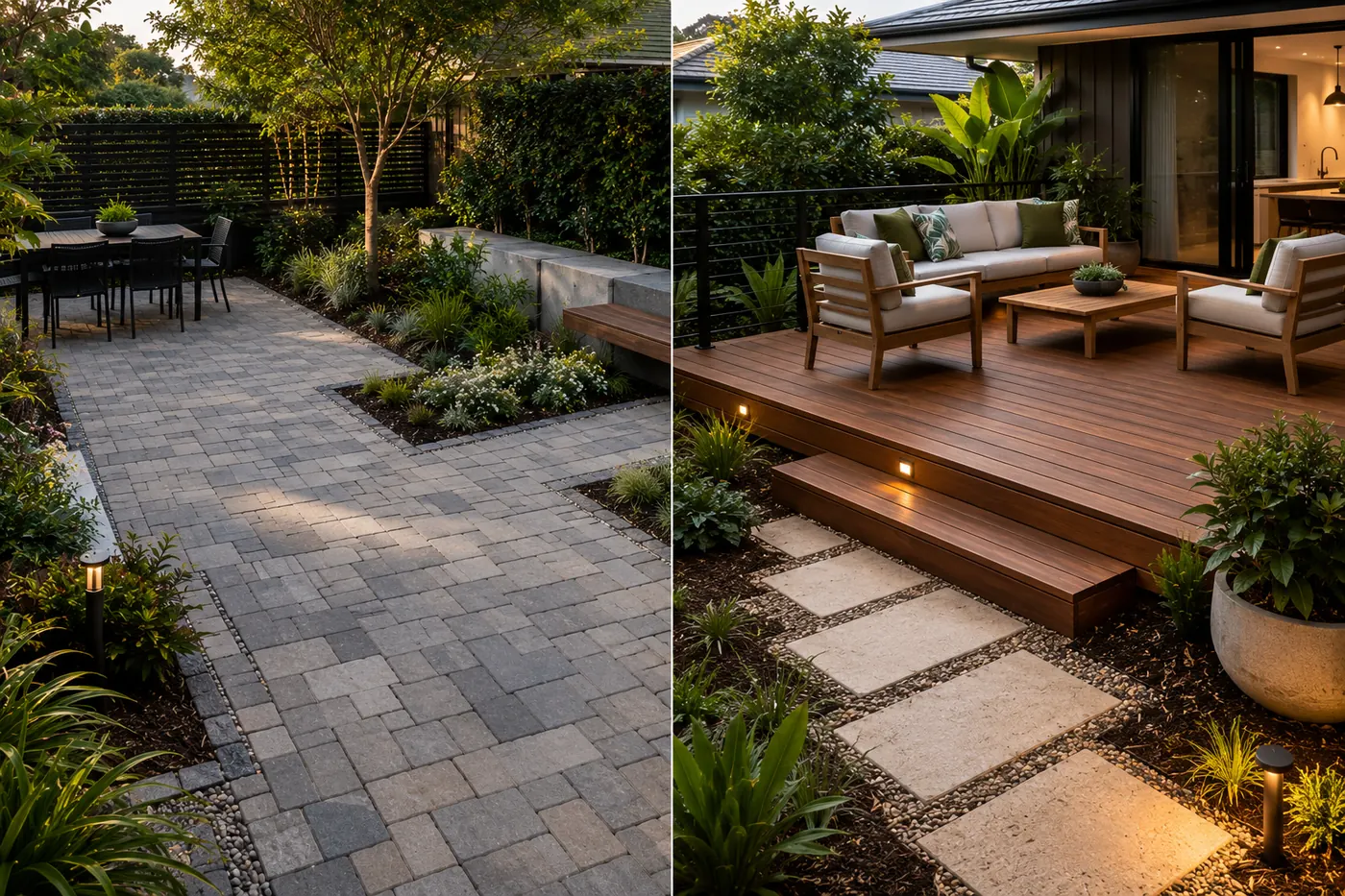
9 Powerful Benefits in the Permeable Paving vs Decking Debate
1. It Manages Rain Where It Lands
The clearest difference in the permeable paving vs decking decision is how each surface interacts with water. A correctly designed permeable system allows water to move through the surface and into the bedding and base layers below. Depending on the soil and design, that water may infiltrate gradually, be temporarily stored within the base or be directed to an underdrain.
This can be valuable in a drainage-friendly backyard where adding another fully sealed surface would increase runoff. It does not mean permeable paving automatically fixes every wet yard. Clay soil, high groundwater, steep grades and water arriving from neighbouring areas may require additional drainage or engineering. The surface, base and outlet must work as one system.
2. It Creates Practical Ground-Level Transitions
Permeable paving can form a direct transition between lawns, garden beds, side paths and outdoor living zones. It is especially useful where the desired finished surface is close to existing ground level and a raised structure would create an unnecessary step.
For households with children, older family members, prams or wheeled garden equipment, a level paved route can feel simple and predictable. Thresholds still need to be detailed carefully so water is directed away from the home and damp-proofing requirements are protected.
3. It Avoids Timber Refinishing
Homeowners often compare permeable paving vs decking because they want a low-maintenance outdoor floor. Permeable paving does not need sanding, staining or oiling. Routine care usually involves removing leaves and sediment, keeping joints open and checking that water continues to drain as intended.
That is different from being maintenance-free. Fine material can clog the surface over time, particularly near bare garden beds or areas where soil washes across the paving. A practical design reduces this risk with stable edges, planting, correct falls and an appropriate maintenance plan.
4. It Provides a Stable Surface for Everyday Use
A paved area feels firm beneath dining tables, barbecues, pots, storage boxes and outdoor furniture. Chairs are less likely to rock when paver sizes, joints and levels are selected for the intended use. The same stability can make permeable paving suitable for bin access, utility areas and frequently used side passages.
Material choice matters. A permeable driveway, a garden path and a barefoot courtyard do not require the same paver thickness, texture or structural base. The paving system should be specified for the expected load and use rather than chosen only from a sample board.
5. It Offers More Visual Variety Than Many Homeowners Expect
Permeable paving is not limited to grass-filled concrete grids. Depending on the project, the design may use permeable interlocking pavers, porous units, widened joints filled with clean aggregate or a pattern that combines paving with planted areas.
This gives Sydney homeowners freedom to match contemporary architecture, traditional brickwork, naturalistic gardens or coastal palettes. A professional landscape design can coordinate paver colour, joint width, garden edging, planting and drainage so the surface looks intentional rather than purely technical.
6. It Works Across More Than the Main Entertaining Area
When comparing paving vs decking in Sydney, the discussion often focuses on the backyard patio. Permeable paving can also improve narrow side access, front entries, paths between garden zones, bin storage areas and selected driveway applications.
Using one coordinated paving family across several areas can give the property a consistent visual language. Different formats or laying patterns can then identify movement routes, sitting areas and service zones without introducing too many unrelated materials.
7. Local Repairs Can Be Straightforward
If a paver is stained, cracked or disturbed by work below the surface, a modular paving system may allow a local section to be lifted and reinstated. Jointing aggregate can also be topped up where needed. This can make future access to some underground services less disruptive than cutting through a single continuous slab.
The result depends on keeping spare matching pavers and recording the original specification. Colour batches and product ranges change, so storing a small quantity after installation is a sensible precaution.
8. It Can Connect Hardscape With Planting
Permeable paving can soften the divide between built surfaces and garden areas. Open joints, planted bands, rain gardens and tree zones can be integrated into the layout so water movement and planting are considered together.
This is one reason permeable paving Sydney projects can feel more like landscape design than simple surface replacement. The paving can guide water toward useful planted areas while still creating a clean route through the garden. The design must avoid directing excessive water toward building footings, neighbouring properties or locations that cannot drain safely.
9. It Can Reduce the Need for a Raised Structure on Level Sites
On a relatively level property, a deck may require footings, framing, ventilation space, edge details and possibly steps or balustrades. Permeable paving uses a different construction approach, with excavation, geotextile where specified, an open-graded base, bedding and edge restraint.
Neither system is automatically cheaper. However, when the goal is simply a durable ground-level outdoor area, permeable paving may avoid building a raised platform that the site does not need. This is where the permeable paving vs decking comparison should begin with levels and drainage rather than the price of the visible finish alone.
When Decking Is the Better Choice
Permeable paving has strong advantages, but decking remains the better surface in several common Sydney situations.
A Sloping or Uneven Backyard
A deck can bridge a change in ground level and create a usable platform without excavating the entire area to one grade. On steep sites, this may reduce the amount of cut, fill or retaining work needed. Footings, structure, bracing and drainage below the deck still require professional design and construction.
An Elevated Indoor Floor Level
Where living-room doors sit well above the garden, a deck can provide a natural extension of the internal floor. This can create a strong indoor-outdoor connection and avoid a long flight of steps down to a paved area. Finished levels must still protect the building from moisture and comply with relevant construction requirements.
A Preference for Warmth and Linear Texture
Timber and high-quality composite boards provide a visual warmth that paving does not reproduce exactly. Decking can also suit lightweight architecture, poolside platforms and gardens where a floating horizontal plane is part of the design. Arianya’s deck installation service includes timber and composite options for different styles and maintenance expectations.
Deck boards allow rain to pass through the gaps, but the deck itself does not solve drainage below. The subgrade, falls, ventilation, access and disposal of roof or surface water must still be planned so moisture does not collect beneath the structure.
Permeable Paving vs Decking Cost: What Changes the Quote?
A reliable cost comparison cannot be made from square-metre rates alone. The visible paver or deck board is only one part of the project. Site access, demolition, excavation, spoil removal, drainage, edge restraint, footings, subframes, stairs, balustrades and material quality can change the final price substantially.
Permeable paving may be cost-effective on an accessible, level site, but a specialised base, underdrain or difficult excavation can increase the price. Decking may cost more on a flat yard where a full structure is unnecessary, yet it can be efficient on a slope where paving would need major retaining and earthworks.
For long-term budgeting, also compare maintenance. Timber decking may require periodic coating, while composite decking generally reduces refinishing but still needs cleaning and inspection. Permeable paving avoids board coating but needs sediment control and joint maintenance. The best quote is one based on a measured design and the complete construction system.
Permeable Paving vs Decking Maintenance: What Each Surface Needs
| Surface | Routine care | Issues to watch |
|---|---|---|
| Permeable paving | Sweep or vacuum loose material, remove leaf litter, control sediment and replenish specified joint material | Clogging, weeds, settlement, broken pavers and blocked outlets or inspection points |
| Timber decking | Wash the surface, clear gaps and apply the recommended finish when required | Splinters, loose fixings, coating wear, rot, movement and poor ventilation below |
| Composite decking | Wash with products suitable for the manufacturer’s system and keep gaps clear | Surface staining, heat, movement, fixing problems and trapped debris below |
Blacktown City Council’s permeable paving inspection reference identifies sediment, clogging, weeds, damaged pavers and outlet blockages as items that should be monitored. This is a useful reminder that drainage-friendly paving performs best when the surface and drainage components remain clear.
Permeable Paving vs Decking for Common Sydney Backyards
| Your situation | Likely starting point | Why |
|---|---|---|
| Level courtyard with runoff concerns | Permeable paving | Creates a firm ground-level surface while supporting on-site water management |
| Living area sits high above a sloping yard | Decking | Bridges levels and creates an elevated entertaining platform |
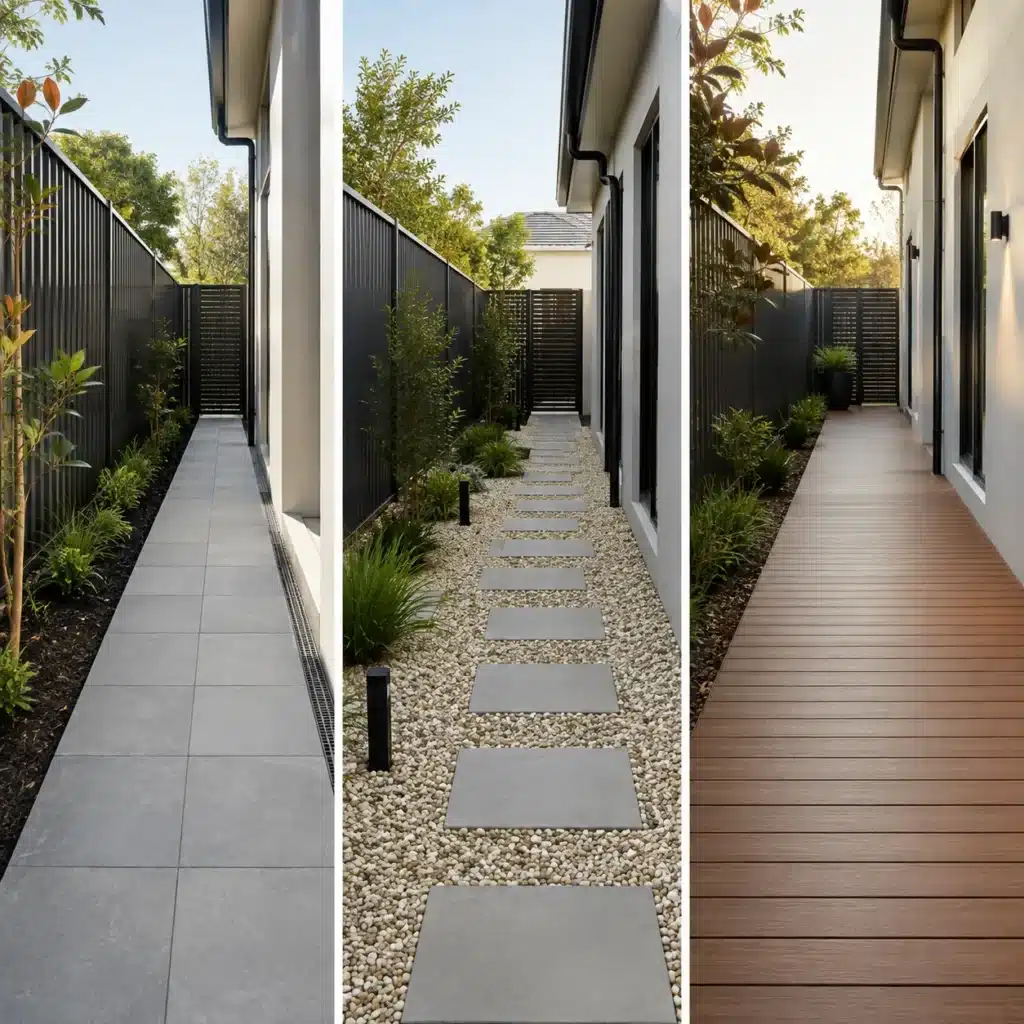
| Narrow side path used for bins and garden access | Permeable paving | Provides a stable, flush route with less need for a raised structure |
| Homeowner wants natural timber character | Timber decking | Delivers genuine grain, warmth and a traditional outdoor-living feel |
| Homeowner wants a wood look with less refinishing | Composite decking | Retains a board format while reducing routine coating work |
| Large backyard with several levels and uses | Combined design | A deck can serve the raised entertaining zone while permeable paving handles paths and ground-level areas |
Permeable Paving vs Decking: Can You Combine Both?
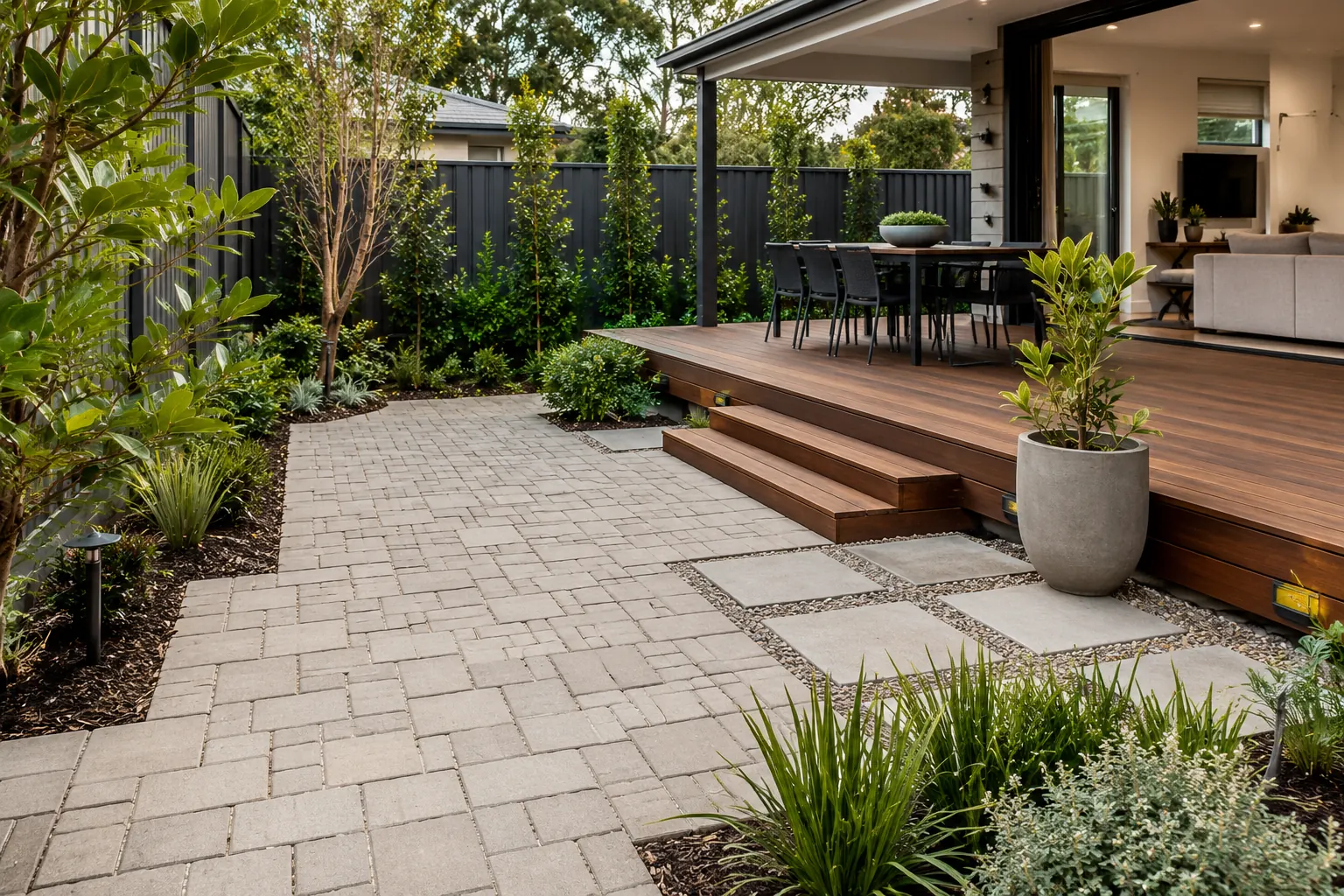
Yes. In many projects, the strongest answer to permeable paving vs decking is to use both. A deck can align with elevated doors and define the main entertaining platform, while permeable paving can form the barbecue zone, garden path, side access or lower courtyard.
The success of a combined design depends on the transition. Finished levels, edge support, drainage, movement, board direction and paver pattern should be resolved before construction. The junction should look deliberate and should not trap water, create a trip point or make future maintenance difficult.
Arianya’s paving services, deck construction and landscape planning can be coordinated so each material is used where it performs best rather than forcing one surface across the entire yard.
Planning and Drainage Checks Before You Build
Some paving and deck projects may qualify as exempt development in NSW, but only when the relevant property and development standards are met. The NSW Planning Portal guidance for driveways, pathways and paving advises homeowners to check the applicable controls and ensure works are structurally adequate and correctly installed.
Decks have a separate set of considerations. Review the NSW guidance for balconies, decks and patios, then confirm local council requirements, property constraints, tree controls and any need for professional certification before work begins.
For permeable paving, ask how the system will deal with a major storm after the base has filled. For decking, ask where water falling through the boards will travel and how the area below will be inspected. These questions are more valuable than choosing a surface from appearance alone.
Final Verdict: Permeable Paving or Decking?
For a level patio, courtyard, front path or side access area where drainage is a priority, permeable paving is often the stronger starting point. It creates a stable low-maintenance outdoor surface, supports thoughtful water management and integrates easily with planting and ground-level circulation.
For a sloping backyard, elevated doorway or design that needs a raised platform, decking may be more practical and visually appropriate. Timber offers natural character, while composite boards can reduce refinishing requirements.
The best permeable paving vs decking decision comes from assessing levels, soil, runoff, access, intended use and maintenance together. In some Sydney homes, one material will clearly suit the site. In others, a carefully detailed combination will create the most functional and attractive result.